Can a CrossFit Competition Be Only Single-Modality?
Imagine showing up to a CrossFit competition and seeing this: Event 1 is a 10K run. Event 2 is a 1-rep-max clean and jerk. Event 3 is 30 ring muscle-ups for time. No couplets, no triplets, no barbell mixed with burpees, and no running into gymnastics into weightlifting. Every event tests one thing. They are all single-modality.
Would that still be a CrossFit competition? More importantly, could it actually determine who is the fittest athlete? I think you can make a pretty strong argument that it could — with a small change to that three-event format.
Let the Specialists Specialize

CrossFit programming draws from three modalities: metabolic conditioning, weightlifting, and gymnastics. In Foundations, Greg Glassman talks about “fringe athletes” — athletes who specialize so heavily in one area that it comes at the expense of broader fitness. For our example, think of a triathlete, a powerlifter, and a gymnast. Glassman writes, “Elite strength and conditioning is a compromise between each of the 10 physical adaptations.”The goal of CrossFit is not to find the best specialist. It is to find the best generalist — the athlete who can balance that compromise better than everyone else.
At a CrossFit competition, each of those specialists should still be capable of winning something. The triathlete should have an event where endurance can shine. The powerlifter should have a chance to dominate a pure strength test. The gymnast should have an event where gymnastics is the deciding factor. But at a lot of CrossFit competitions today, a true specialist might not be able to win a single event.
That is not because CrossFit athletes have suddenly become better runners than endurance athletes, stronger than powerlifters, or better gymnasts than gymnasts. It is because competition programming has become so heavily focused on mixed-modality events that specialists are rarely tested on their specialty alone. The runner gets running mixed with gymnastics or weightlifting. The lifter gets strength buried inside conditioning. The gymnast gets gymnastics mixed with a machine or barbell. At that point, are we really proving the generalist is fitter, or are we just proving they are better at mixed-modality events?
The Hopper Is the Competition
Greg Glassman
“It could be agility drills from track; one-rep-max bench press from football; Fran, Helen, and Diane from CrossFit; Pilates, and yoga. Do not exclude anything: the more, the better.”
CrossFit has four models of fitness that we can use to evaluate fitness. One of them is the Hopper Model, which looks at an athlete’s ability to perform well at whatever physical task comes out of the hopper. I think people sometimes picture that hopper as being filled with traditional mixed-modality “CrossFit workouts”: Fran, Helen, Murph, Diane, and so on. But that is not what Glassman described.
He wrote, “It could be agility drills from track; one-rep-max bench press from football; Fran, Helen, and Diane from CrossFit; Pilates, and yoga. Do not exclude anything: the more, the better.” That means a test coming out of the hopper does not need to combine weightlifting, gymnastics, and metabolic conditioning. It could be a 10K run. It could be a max bench press. It could be an agility test. It could also be Fran.
The competition itself can be the hopper. With enough tests, we do not necessarily need to manufacture variance inside every individual tests. The variety can exist across the entire competition, and the leaderboard can do the mixing for us. Glassman even writes, “It may very well be that the fittest man on Earth is in the 75th percentile for each event picked.” In other words, the fittest athlete may not win many individual tests at all. They may simply be consistently good at whatever comes out of the hopper.
The variety does not have to exist within every test. It can exist across the entire competition.
What Do Mixed-Modality Events Add?
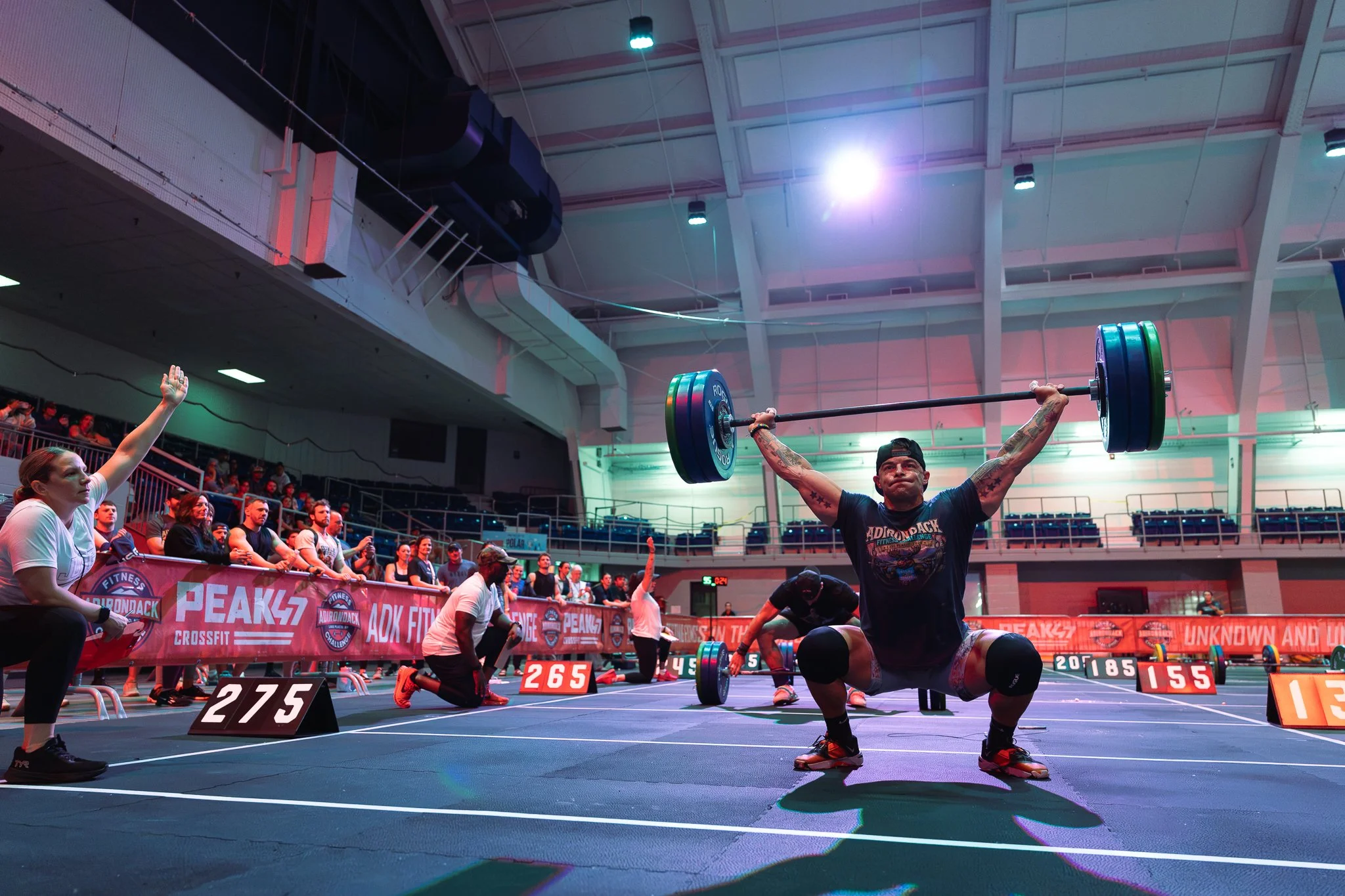
Mixed-modality events add a completely different dimension to CrossFit competition. They test pacing, interference, transitions, skills under fatigue, and strategy. When a 20-minute AMRAP gets programmed, athletes need to know how fast they can start, where they can push, and where they need to throttle down. They need to know that sprinting the Echo bike before a set of box jump-overs probably is not a great idea. They need to be efficient getting in and out of the rower, and they need to know the smartest way to break up a workout like “DT.”
Beyond strategy, mixed-modality events also test something that isolated tests cannot: the ability to express one capacity while another is creating fatigue. Someone might have a 500-pound deadlift and a 5-minute mile, but that does not necessarily mean they would dominate four rounds of 10 deadlifts at 315 pounds and a 400-meter run. That workout would have a completely different feeling than doing either movement by itself. The running affects the deadlifting, the deadlifting affects the running, and that interference is real.
There is no question that mixed-modality events belong in CrossFit competition. The bigger question is whether we need them to find the fittest athlete, or whether they are simply another type of test that belongs in the hopper.
Are We Testing CrossFit or Testing Fitness?
There is no such thing as a “CrossFit workout.” At least not in the way people usually mean it.
CrossFit is a methodology, not a specific workout format. A workout does not become more “CrossFit” because your heart rate is through the roof and you put burpees with deadlifts. A 5K run can fit the methodology. So can a 1-rep-max clean and jerk. So can Fran. What makes CrossFit CrossFit is the variance across the program over time, not the number of modalities packed into one workout.
The purpose of CrossFit training is to create a broad enough stimulus that it produces broad adaptations. We run, lift, jump, climb, sprint, carry, move heavy loads, move our own bodyweight, and work across different time domains because we are trying to build fitness that transfers to almost anything. The constantly varied training is the stimulus. Strength, endurance, stamina, power, speed, coordination, agility, balance, accuracy, and flexibility are the adaptations we hope that stimulus produces.
That distinction matters a lot when we get to competition. At a CrossFit competition, we should be testing the adaptations, not simply recreating the exact training methods that produced them. Part of what made CrossFit so compelling in the first place is that it works. But the more interesting promise was that we did not have to specialize. By deliberately training broadly, we could become pretty damn good at almost everything without needing to be the best at any one thing.
The CrossFit athlete does not need to be the best runner, the strongest lifter, or the best gymnast. They just need to be good enough across all of them that when enough tests are added together, the generalist comes out on top.
If every event at a competition simply looks like another mixed-modality training session, at a certain point are we still testing fitness, or are we just watching athletes train with a judge standing next to them? A test does not have to look like the training that prepared you for it. If CrossFit training has made you strong, then a max lift should expose that. If it has built cardiovascular endurance, then a long run should expose that. If it has developed gymnastics capacity, then a gymnastics test should expose that.
The athlete’s training should be varied enough that they are ready for whatever gets tested. The individual tests themselves do not necessarily need to be.
So, Can You Have a Single-Modality CrossFit Competition?
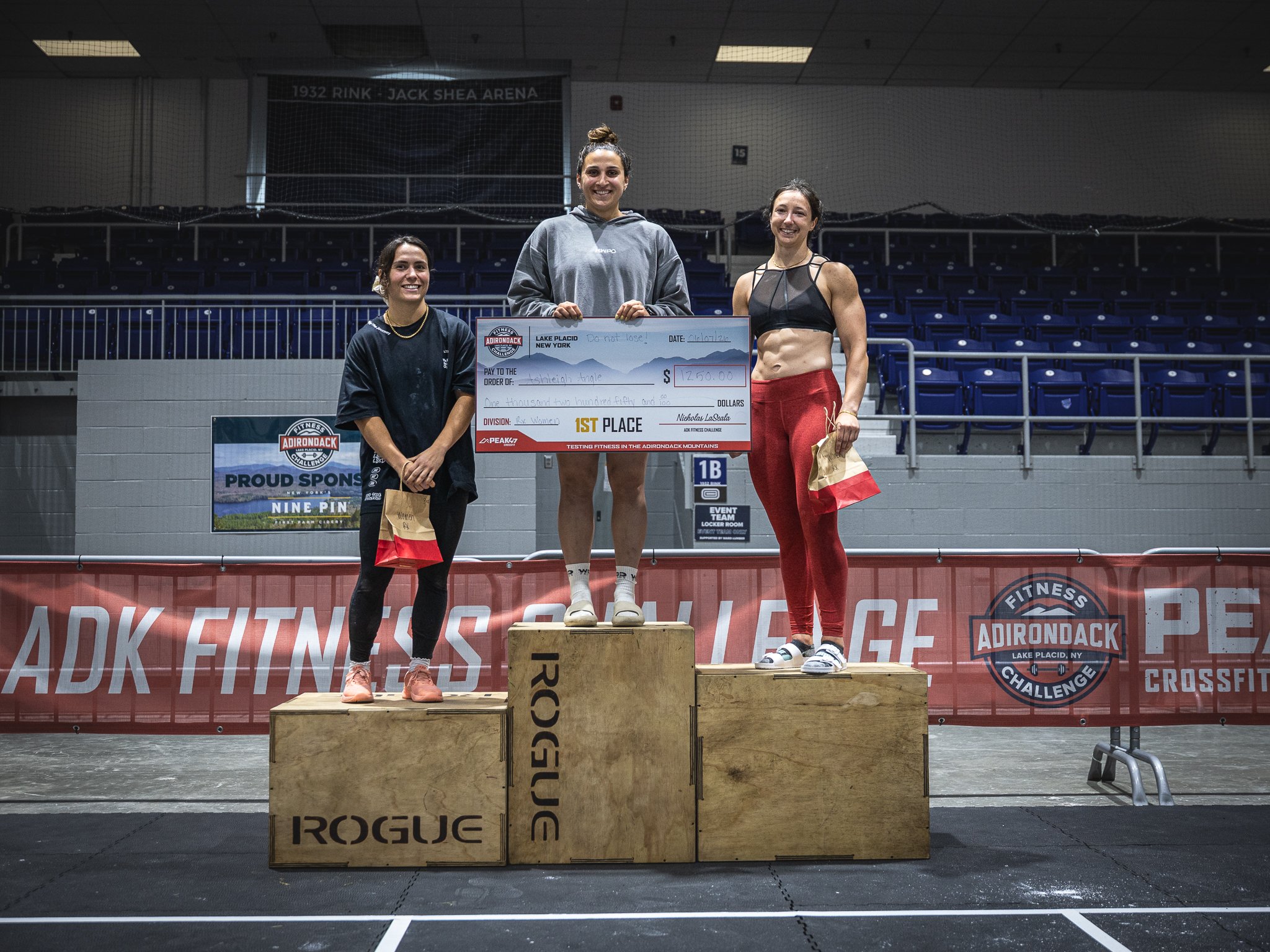
I think you can. Not with only three events — a 10K run, a max clean and jerk, and 30 ring muscle-ups probably do not give us enough information to confidently crown the fittest athlete. But give me enough tests across enough movements, time domains, physical skills, and energy systems, and I do not see why any of them absolutely have to be mixed modality.
If we want to claim that the winner of a CrossFit competition is truly the fittest, then the competition has to give specialists a fair chance to prove their specialty. The runner should get to run. The lifter should get to lift. The gymnast should get to do gymnastics. Otherwise, we risk calling the CrossFit athlete the fittest simply because the events look more like the training they have practiced all year. The real test of the methodology is whether the generalist can compete with all of those specialists across a broad enough collection of events — and still come out on top.
That is the claim CrossFit competitions should be trying to prove: not that CrossFit athletes are best at “CrossFit,” but that broad, nonspecialized CrossFit training can produce a generalist who is fitter overall than any specialist.
Want to test your fitness?
The Adirondack Fitness Challenge Online Qualifier is designed to test athletes across a broad range of skills, strengths, and capacities. Learn more about the Online Qualifier.
Sources
Glassman, Greg. “Foundations.” CrossFit Journal, April 2002. This is the source for the 10 General Physical Skills, “fringe athletes,” the broad adaptational response, and the statement that elite strength and conditioning requires compromise across physical adaptations. Read “Foundations” (PDF)
CrossFit Level 1 Training Guide — “What Is Fitness?” This is your key source for the four models of fitness, the Hopper Model, the examples of what can go into the hopper, and the statement that the fittest athlete could be around the 75th percentile in each event. CrossFit Level 1 Training Guide (PDF)
CrossFit. “CrossFit Methodology.” Useful for your section arguing that CrossFit is a methodology centered on constant variation, functional movement, and intensity rather than one specific workout format. CrossFit Methodology